

NATO allies are jointly procuring up to 10 Saab GlobalEye airborne early warning aircraft to replace the alliance’s E-3 Sentry fleet, in the headline announcement of a series of multinational procurement projects unveiled at the Ankara summit.
Secretary General Mark Rutte said the E-3 Airborne Warning and Control System fleet has been NATO’s eyes in the skies for decades, deployed from northern Norway to southern Türkiye, but the aircraft are reaching the end of their lives. The GlobalEye purchase, he said, “will ensure we keep NATO’s owned and operated surveillance and early warning capability strong and credible for decades to come,” describing the Saab system as proven, with a demonstrated ability to detect, track and identify complex threats including drone swarms, ballistic missiles and cruise missiles, and providing simultaneous surveillance across the air, maritime and land domains from a single platform. Alongside the joint buy for the NATO-owned fleet, several allies launched a separate multinational project to cooperate on procuring more airborne early warning aircraft such as GlobalEye against their national requirements, with Swedish Prime Minister Ulf Kristersson taking the stage for the announcement.
GlobalEye combines Saab’s Erieye ER radar with a Bombardier Global 6000 business jet airframe, pairing Swedish mission systems with a Canadian platform, and is in service with the United Arab Emirates and on order for Sweden, with the type having beaten alternatives to the alliance requirement under the Alliance Future Surveillance and Control effort.
The selection settles the future of NATO’s collectively owned fleet on a different platform from the Boeing E-7 Wedgetail chosen nationally by the United Kingdom, whose first aircraft are entering RAF service, and by the United States before Washington’s wavering over its own programme.
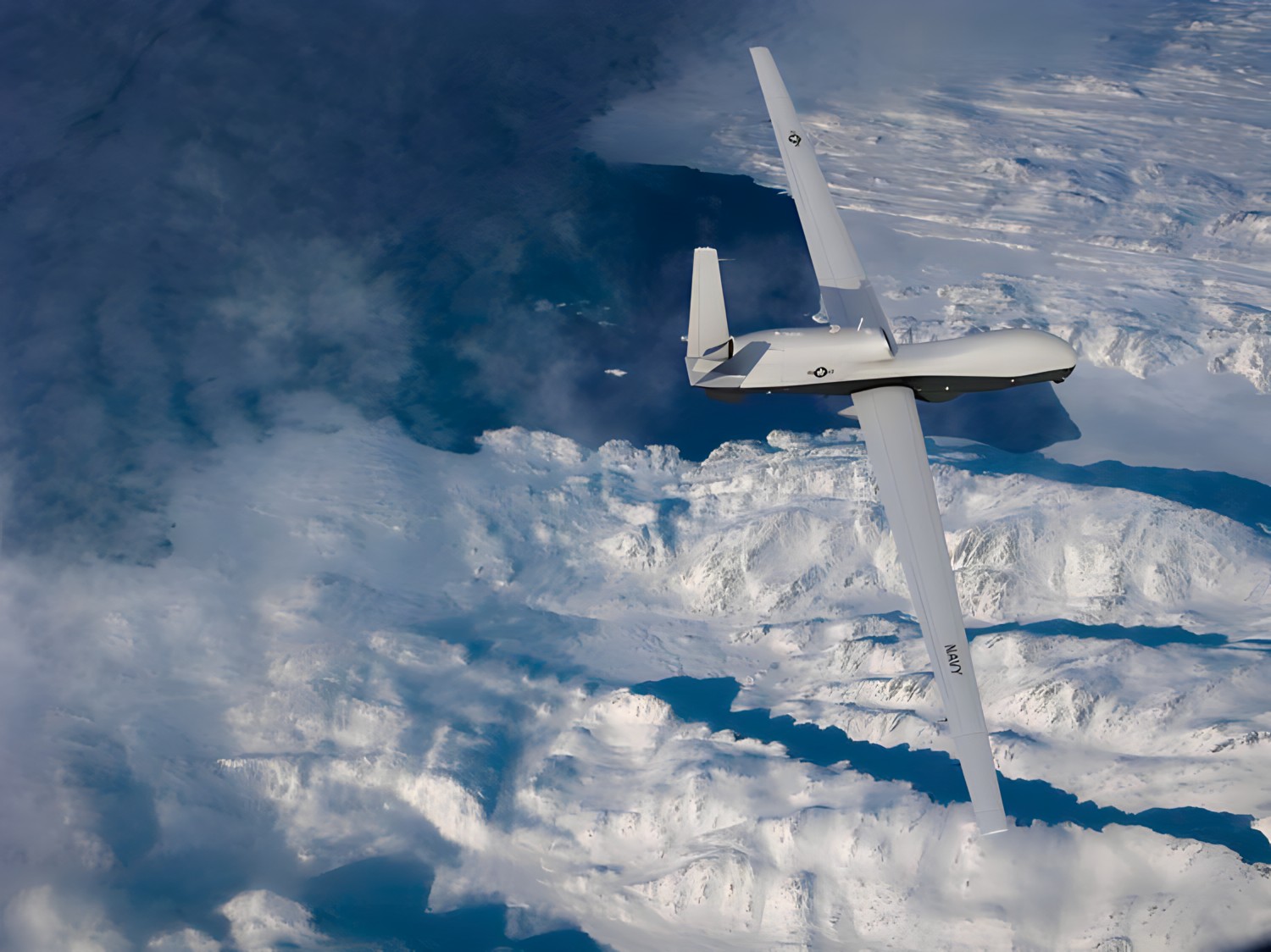
The alliance is also adding up to five Northrop Grumman MQ-4C Triton high-altitude, long-endurance uncrewed aircraft to its ISR Force, which currently operates the RQ-4D Phoenix fleet from Sigonella in Italy. Rutte said the Tritons will provide persistent surveillance over large maritime areas day and night, helping the alliance “detect threats early, protect our sea lines of communication, and support operations in demanding regions, such as the High North,” with Denmark, Finland, Germany and Norway among the participating nations.
The Triton is the maritime derivative of the Global Hawk, able to remain airborne for over a day while surveying vast ocean areas, and its addition follows a period in which the protection of undersea infrastructure and the monitoring of Russian naval activity in northern waters have risen sharply up the alliance’s agenda.
In the air mobility domain, allies confirmed the forthcoming delivery of the tenth Airbus A330 MRTT to the Multinational MRTT Fleet, the pooled tanker and transport force operated from Eindhoven and Cologne on behalf of its member nations, bringing the fleet a step closer to its full strength of 12 aircraft, while a new multinational project was launched on the A400M airlifter with Belgium, Croatia, France, Poland, Spain, Turkey and the United Kingdom participating.
The UK operates 22 A400M Atlas aircraft from RAF Brize Norton, and the project offers a route to deepen cooperation between operators of the type on availability, support and future development, although the announcement did not detail the project’s scope.
Rutte described the announcements collectively as capabilities “Made in NATO,” with the contracts to be signed through the summit worth billions of dollars across the transatlantic industrial base.





Why did we not buy it, its chaper, faster to build and we would have them in service by now instead still trialing one AWACs with just two to follow in a year or more,
We have been too busy trying to keep America sweet – buying its gear and pretending we can act as mini US.
true while they up the price and make loads from servive up date contracts
No doubt a few more, rather than just 3.
Because its less capable. 200km less official radar range and isn’t built from the ground up with integration with the F35. Turns out thst the inverse square law does actually apply
Integration with the ‘Boondoggle’ F35 rightly did not feature in this decision. Bravo.
Please go back to boring people in the pub about drones
A grown up reply was not expected.
I’ve no problem with buying cheaper, the “good enough” to achieve more mass in certain areas that go bang, if the effects the same.
But in ISTAR, which is king, within which is the Intelligence side, in which the UK remains a major power, then we should buy the best available, and I believe E7 is that.
Oh I agree, but we have none working, and will only have 3 now that’s not the wise choice. We always do this buy the best but nit a lot of it and its takes for ever to get in to service. It’s a case of which is best none of the best yet, or some things that ok and we would have more than the joke 3.
We have nothing just like tube Arty, armoured recce vehicles, time will tell if going with out abd retiring older kit with no working replacement was sensible.
Theres nothing wrong with a diversity of aircraft. The E7 is a very good aircraft
So good the Americans talked about abandoning it. Not sure what the plan is this week.
Why not have both in service ? As we are that cash strapped we can not buy 2 aircraft for 5 sets of radars etc we have buy cheap but still works?
We need to get the E7 wedge tails in the air so they can prove their worth. It will be interesting to see how long this aircraft is in service for with all the new technologies coming on stream.
New technology doesn’t change the inverse square law. A radar 1/4 quarter of the power will have 1/16th of signal strength any given range, which makes a huge difference when facing aircraft with reduced radar cross section
Lots of new techniques and technologies in development EO / IR and passive RF sensors in use or being developed plus the satellite technology infrared and passive RF satellite space based systems. It will be interesting to see which technology proves most successful.
All good stuff, it’s important the UK sticks with E7 however. It’s a much more capable battle management aircraft and it also has some major electronic attack capabilities. We really should have taken the opportunity in the DIP to move up to at least five.
Agreed, It seems ridiculous to not get back to the five given the small proportionate costs.
Next time you see Andy, maybe you can ask him ?
If that reliability matches Reeves extra T31s, I’d not put much stock in that.
😁