

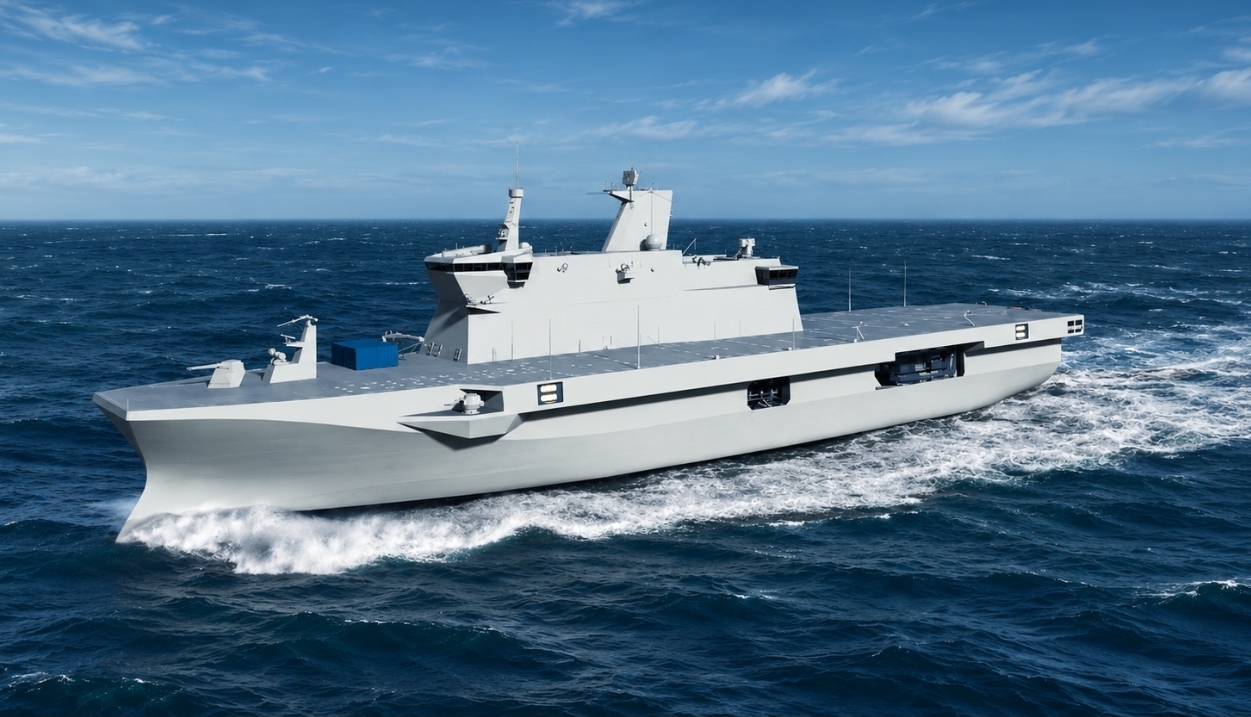
Britain and the Netherlands are still exploring the Amphibious Transport Ship as a potential joint programme, Luke Pollard has said when asked about Damen’s announcement on where the ships would be built, according to an answer given in Parliament.
Conservative MP Ben Obese-Jecty asked what assessment the Defence Secretary had made of the implications for the department’s policies of the announcement by Damen on 11 November on the location of the construction of amphibious transport ships.
Pollard, Minister for Defence Readiness and Industry, said: “The UK and Netherlands are exploring the Amphibious Transport Ship as a potential joint programme to provide the next generation of amphibious shipping required by the Commando Force from the mid-2030s. The Department remains committed to the National Shipbuilding Strategy, supporting a competitive, innovative and productive UK shipbuilding enterprise while ensuring the Armed Forces receive the capabilities they require.”
Richard Keulen, Damen’s director of corporate strategy and innovation, told Romanian news agency News.ro at the Euronaval exhibition in Paris that the next project at the company’s Galati shipyard in Romania would be amphibious transport ships for the Royal Netherlands Navy. He said Britain was interested in joining and would buy four ships, but that governments had to decide how it would take part, as we reported on 13 November.
The government announced a £2.4 billion UK-Netherlands partnership for eight ships, four for each navy, at the NATO summit in Ankara in July, when it said “the vessels will be built in the UK to a Dutch design.” Sir Keir Starmer, then Prime Minister, said: “I am incredibly proud that British shipyards will help deliver these ships.” Pollard told MPs and peers the following day that Britain would be “building them for the Netherlands as well.”
Since then, ministers have described the ships in more cautious terms. In written answers to Conservative MP Rebecca Smith last week, Pollard used the same wording, saying the two countries are exploring the ship as a potential joint programme, and that Defence would cover the gap left by HMS Albion and HMS Bulwark using “existing Royal Navy and Royal Fleet Auxiliary assets.” No construction contract has been announced, and neither government has named a builder for the Royal Navy’s ships.
Damen Naval unveiled the design at the NEDS exhibition in the Netherlands last week. The ships are expected to be about 160 metres long and displace around 15,000 tonnes, with flight decks for drones and autonomous systems, and the Netherlands is aiming for its first ship in 2032. Galati has built more than 30 military vessels for NATO and allied navies and is due to begin work next year on at least six anti-submarine frigates for the Netherlands and Belgium.
The Defence Investment Plan dropped the Royal Navy’s Multi-Role Strike Ship in favour of the Dutch-led programme. Figures released in Parliament this week show the Royal Navy currently lists no amphibious ships in its surface fleet, down from two in July 2024.
Questions over overseas construction have arisen before, and a peer has asked why 24 new tugs will be built in the Netherlands. The National Shipbuilding Strategy sets out the government’s aim for a sustainable UK shipbuilding industry, and Lord Coaker listed the Amphibious Transport Ship among future major shipbuilding programmes in a reply on Harland & Wolff last week.








“potentila joint programme”, “fron the mid 30’s”, So we’re going backwards again. What a surprise.
And so it begins.