

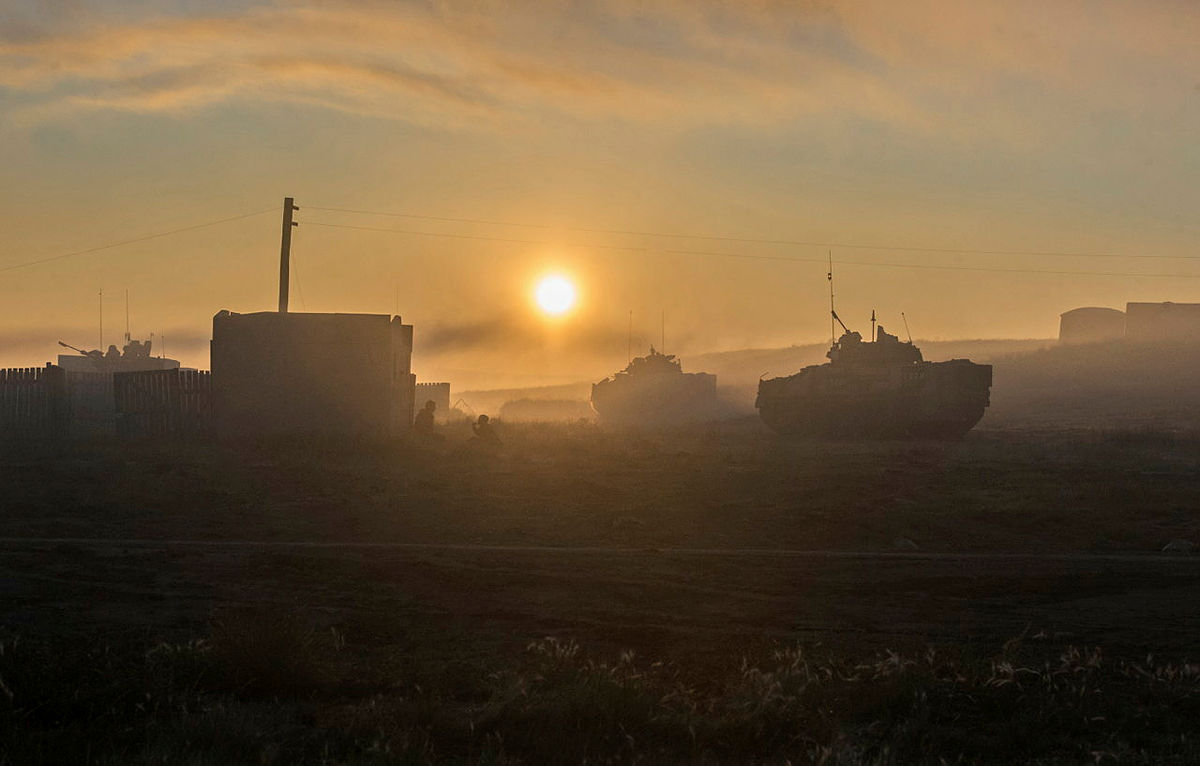
The British Army’s sprawling training area in Canada is to become a major testing ground for uncrewed systems, with new investment enabling drone activity across 2,700 square kilometres of prairie, the UK Defence Journal understands.
The commitment features in the Defence Investment Plan, which promises “investment to exploit the size, scale and freedom of our site in Canada for testing and evaluation and to accelerate delivery of capability.” The document states this “will enable uncrewed systems activity across 2,700km² of training area” at the British Army Training Unit Suffield, known as BATUS.
BATUS, located in Alberta, has for decades been the British Army’s largest overseas training facility, its open terrain historically used for large-scale armoured manoeuvre exercises that could not be conducted in the UK. The plan now casts the site in a new role, complementing existing drone testing sites in the UK and in the Overseas Territories, with its scale and regulatory freedom offering room for uncrewed systems work at a scope unavailable at home.
The investment sits within what the Ministry of Defence describes as the largest ever drone investment in Defence, with more than £5bn committed to autonomous systems by 2030. “Ukraine shows that we must rethink warfare: cheap, massed, precise systems now dominate. Speed is decisive,” the plan states.
Coordination of that effort falls to the new Uncrewed Systems Centre in Swindon, which receives £310m and includes the recently opened DroneTEX facility. The centre is described as Defence’s central authority for the uncrewed systems ecosystem, establishing common standards, open architectures, data frameworks and assurance models, and it is taking a lead role on regulation in the autonomy space.
Alongside it, a UK Uncrewed Systems Taskforce will bring together people, data and machines around pressing operational problems. “Ukraine has shown what battlefield adaptation can be like: fast, lethal and relentless. We must now translate these lessons into how UK forces will fight,” the document states, adding that the taskforce will work with industry “to field capabilities in weeks not years” and is “designed to think differently and prototype an approach that others in the UK and NATO can follow.”
Over time, the plan states, this could build towards a new kind of combat team that competitively fights with and against drones, creating the doctrine and capabilities required for a new kind of battlefield.
The testing expansion at Suffield connects to a wide pipeline of systems needing trial and evaluation, including Project CORVUS surveillance drones replacing Watchkeeper, Project NYX armed autonomous drones, uncrewed ground vehicles funded at £150m, one-way attack drones, and air launched effects such as drone swarms deployable from crewed and uncrewed aircraft. A separate online Test and Evaluation marketplace is due to launch in 2026, helping users identify and connect with suitable facilities and support services from across the public and private sectors and from international partners, according to the plan.



A late reprieve for BATUS, which has being slowly rundown for years. All eyes now turn to the fate of the vast Omani-British Joint Training Area (OBJTA) in Oman. It opened in 2019 as part of the UK’s Indo-Pacific tilt, which never really happened and SDRS2025 reversed to a NATO / Northern Europe focus. Plans to forward base LRG(S) and a battlegroup led by 40 Commando RM in Oman died at least two years ago.
Yes…I’m not aware that any of BATUS Armour holdings ever ended up there. Some I understand ended up at Munchengladbach Ayrshire Barracks and the CHE store’s there.
But a good idea I think giving BATUS a new role.
If all arms manoeuvre training is required though then surely SPTA remains too small, despite the new infrastructure there.
I can’t wait to see what comes after Drones…..
Cyborgs?
Or…. Vulcans…. with Claws ! 😁
👌