

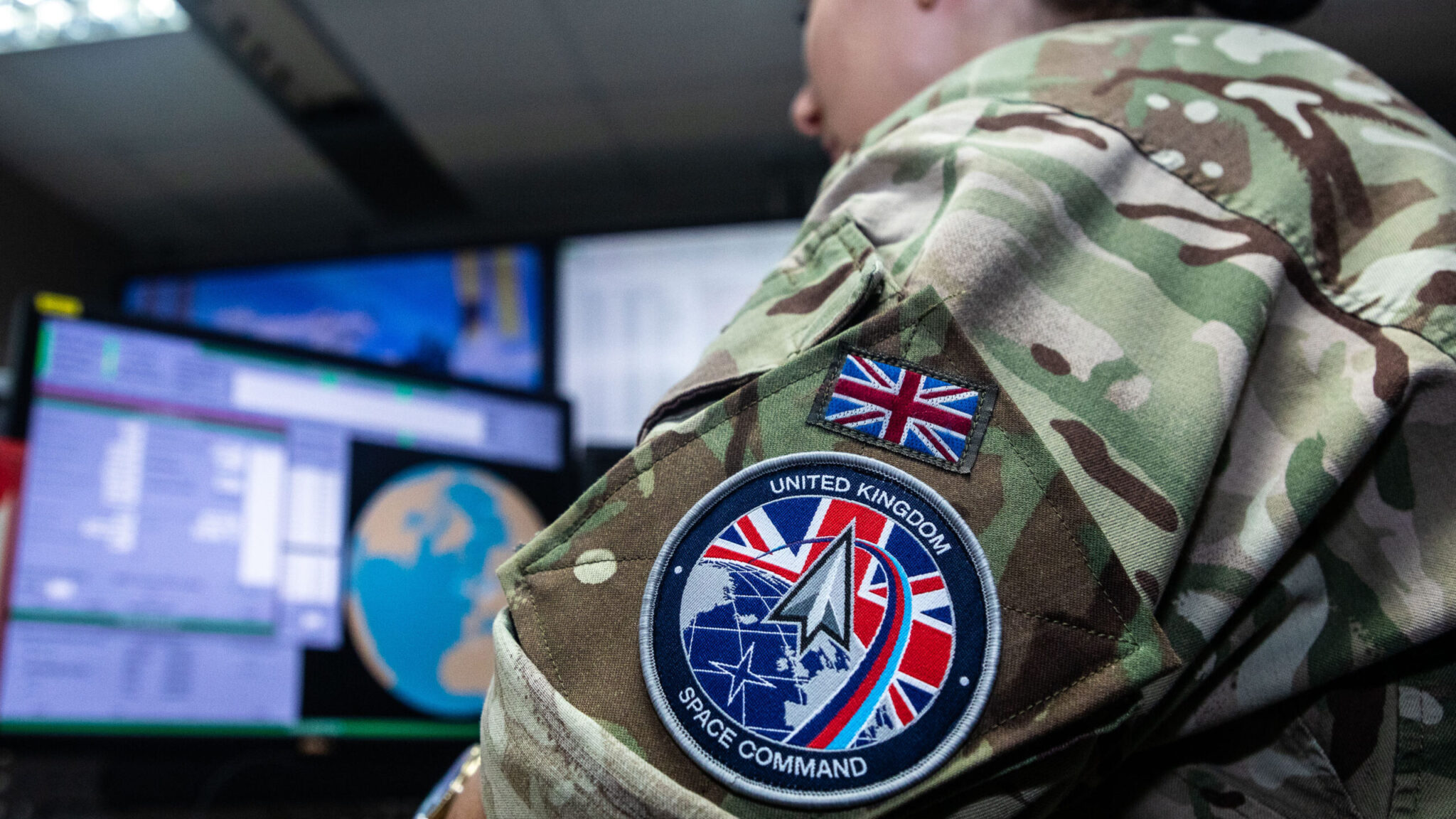
UK Space Command is testing three neuromorphic space domain awareness sensors based in Britain, Australia and the Sovereign Base Areas in Cyprus in a trial due to complete in April 2027, according to an answer given in Parliament.
Conservative MP Ben Obese-Jecty asked when the three ground-based sensors announced alongside the launch of the Titania satellite on 7 November would become operational.
Louise Sandher-Jones, Minister for the Armed Forces, said: “Three neuromorphic Space Domain Awareness (SDA) sensors procured under Project INAROS are being tested by UK Space Command. The trial is scheduled to complete in April 2027 and subsequent assessment of the technology’s ability to meet the published UK SDA Requirements. Decisions on the operationalisation of the sensors will not be taken until this assessment is complete and therefore an operational date cannot currently be provided.”
Neuromorphic sensors mimic biological processes by detecting changes in light, which the Ministry of Defence says could allow them to act as an early warning system. The department announced the trial as it confirmed that Titania, the second satellite in Britain’s military constellation after Tyche, had reached orbit, as part of more than £3 billion of defence space investment over the next four years.
Defence Secretary Wes Streeting said at the time: “The new space age is here.”
Britain has been building up its ability to watch objects in orbit. A space threat detection system became operational six months early, a new telescope has boosted UK space awareness, and Britain is set to get a new deep space radar.
Parliament has questioned how well the wider space effort is co-ordinated. Giving evidence to the Joint Committee on the National Security Strategy on 22 November, Major General Paul Tedman, former commander of UK Space Command, asked “who is actually in charge?” of UK space strategy, noting that three Secretaries of State have been associated with it. Baroness Tyler of Enfield told the same session that the latest list of Cabinet sub-committees omits the space sub-committee called for in the Strategic Defence Review, and witnesses cited a National Audit Office finding of “confusion between departments and no agreed resilience levels” on space weather, MPs and peers heard.
Concern about threats in orbit is growing. Britain is preparing for war in space, and a former chief has warned that Russia and China are growing their space weapons arsenals. MPs have also heard that an adversary could weaponise its own satellite debris.












I had to look up what that even means? Still not sure.
Basically its a sensor network that mimics a brain (inspired by the workings of a biological neural network), that detects changes in light to I guess detect launches or monitor other space assets on lower computing power. This is obviously very useful for smaller satellites. Overarching goal is to engineer a satellite that can reach brain-like performance.
Thank you. Well over my head! I’ll stick to ORBATS!