

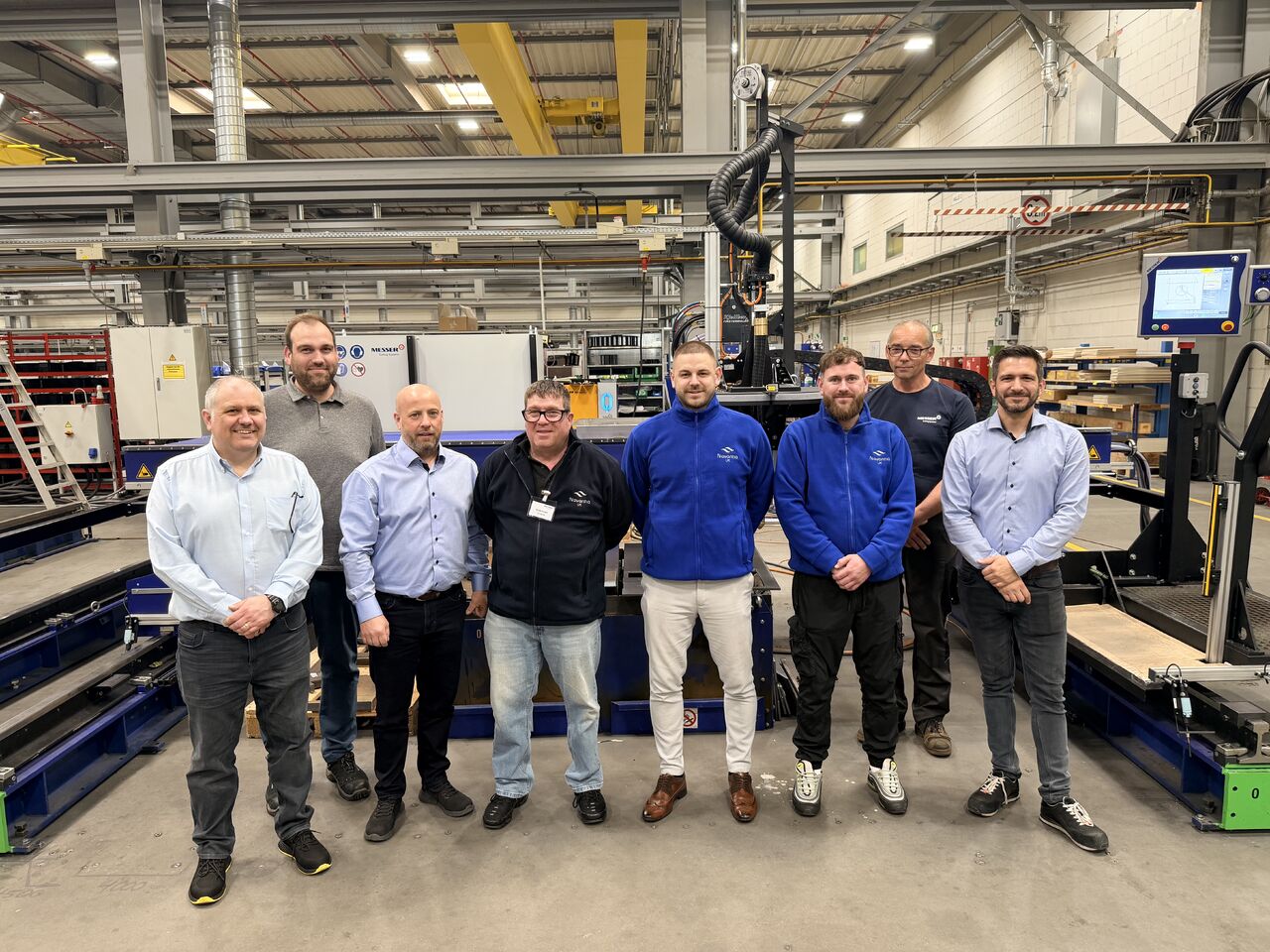
Navantia UK has taken delivery of a new plasma CNC cutting line at its Methil shipyard in Fife, part of a wider investment programme at the site, according to the company.
The line uses a computer-controlled plasma torch to cut steel plate, shaping the raw material that goes into ship blocks and structures. Navantia said it would give the yard faster, more accurate and more efficient steel processing, describing it as a step up in capability as Methil takes on more complex work. The machine is being installed and commissioned, having been brought in ahead of the yard’s next project.
The company said the cutting line forms part of the £27 million it is investing in Methil, within a wider £157 million programme across its four UK yards. Before the machine arrived, members of the Methil team travelled to Messer Cutting Systems in Germany to train on the equipment and see it through its factory acceptance test.
Navantia UK’s Methil yard transformation continues with Seahorse
Dylan Honeyman, a senior design engineer at the yard, said the team’s early involvement had built confidence in the equipment. “Being involved from the factory stage through to installation has given us real confidence in how the machine performs,” he said. “It’s great to see it arrive at Methil, and we’re looking forward to getting it up and running as we deliver our next project.”
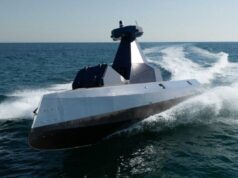
Navantia said the Methil workforce had grown from 180 to more than 260 people, including 54 apprentices, with a further 20 due to join in September. The yard recently delivered Navantia UK Seahorse, an £8 million transport barge measuring 85 metres and weighing 1,400 tonnes, which will carry ship blocks between Appledore and Belfast for the Royal Fleet Auxiliary’s Fleet Solid Support programme. Work is now under way on a specialist vessel for an international customer.
The Methil yard, on the Fife coast, came under Navantia’s ownership in January 2025 through the Spanish state-owned shipbuilder’s acquisition of the former Harland & Wolff business, a deal that also brought the Belfast yard, Appledore in Devon and the Arnish facility in the Western Isles into the group and preserved more than 1,000 jobs across the four sites.
The Fleet Solid Support programme, for which the Seahorse barge will move completed blocks, is the Royal Fleet Auxiliary project to build three stores ships to support the Royal Navy’s carrier strike group, with Navantia UK as prime contractor and the vessels built at Belfast and Appledore alongside Navantia’s yards in Spain.





I’ve gained $17,240 only within four weeks by comfortably working part-time from home. Immediately when I had lost my last business, I was very troubled and thankfully I’ve located this project now in this way I’m in a position to receive thousand USD directly from home. Each individual certainly can do this easy work & make more greenbacks online by visiting
following website—.,.,.,.,.—>>> JobatHome1.Com
I’ve gained $17,240 only within four weeks by comfortably working part-time from home. Immediately when I had lost my last business, I was very troubled and thankfully I’ve located this project now in this way I’m in a position to receive thousand USD directly from home. Each individual certainly can do this easy work & make more greenbacks online by visiting.
following website—.,.,.,.,.,.,.—>>> PayAtHome1.Com
Well it is good to see the investment continuing. This type of inward investment is exactly the kind of investment the country needs, not just defence but across the whole industrial base if we are to rebuild industrial capacity and resilience. The company where I did my apprenticeship build aircraft in WW1 and tanks in WW2, peacetime normal production was compressors…
I also came across an interesting documentary on Disney + of all places about how Lord Beaverbrooks dispersed Spitfire production to Salisbury, Reading and Trowbridge using garages, the odd new building and local factories and businesses. Salisbury alone produced over 2,000 Spits. Turned out to be just as well because the Luftwaffe bombed the Supermarine factories in Southampton in 1940.
The point is the country had the people to train the extra workforce needed and the workshop space to exploit quickly. Right now I don’t think we have today, but the inward investment will help.
Now all we need is that damned Defence Investment Plan.
Cheers CR