


Europe’s largest drone testing centre has been opened in Swindon by Dan Jarvis, in his first public engagement since being appointed Defence Secretary following the resignation of John Healey, with the new facility intended to let the British armed forces develop and field uncrewed capabilities in weeks rather than years, the Ministry of Defence has said.
The Uncrewed Systems Centre, based at the new DroneTEX facility, will serve as the United Kingdom’s focal point for the development and testing of drone technology and drive collaboration with industry, allies and partners, according to the Ministry of Defence. At 545,000 square feet, the size of more than ten football pitches, the department says it is the largest drone test and development facility in Europe.
Jarvis, who toured the site and met defence industry leaders, investors and military specialists, said the character of warfare “is changing, and it is changing fast.” From Ukraine to the Middle East, he said, uncrewed systems were “rapidly evolving and reshaping conflicts, on land, in the air and at sea.” The new facility, he said, would help ensure the UK “embraces technologies that are redefining warfare”, with technology that once took years to reach the armed forces now fielded “in a matter of weeks, because in this new era, those who innovate fastest will win.”
Rather oddly, media were invited to the opening and then uninvited, presumably to avoid awkward questions over the Defence Investment Plan and the resignations of Healey and the Armed Forces Minister Al Carns, who both quit the department on Thursday over the funding settlement behind the plan. The event went ahead without press in attendance, leaving the new Defence Secretary’s first outing in the job to be communicated by departmental press release.
The Ministry of Defence points to the conflicts in Ukraine and Iran as the driving logic behind the centre, with cheap systems destroying high-value targets and innovation cycles measured in weeks. Ukraine uses roughly 200,000 drones a month, the department says, and at the height of the conflict in Iran some 700 drones were being launched per day.
The centre will work with British companies, supporting SMEs, unlocking exports and creating high-skilled jobs, according to the department, and will harness data and digital integration as the UK embraces AI and autonomy, including through the new Task Force RAID, for Rapid AI Delivery, announced by the Prime Minister and the Chief of the Defence Staff earlier this week.
The numbers attached to the announcement set out the scale of the government’s bet on autonomy. The Strategic Defence Review announced a £2 billion increase in autonomy investment this parliament, taking total defence investment in autonomous systems to £4 billion, while the Ministry of Defence has spent over £450 million on uncrewed systems since July 2024, including £300 million on research and development. In the last year, UK Defence Innovation, the department’s innovation arm backed by a ringfenced annual budget of at least £400 million, has injected over £142 million in rapid investment to scale up production of drones and anti-drone weapons.
The opening hands the new Defence Secretary a friendly stage on his first day in one of the most difficult inheritances in recent Whitehall memory, with the Defence Investment Plan that triggered his predecessor’s departure still unpublished, the NATO summit in Ankara weeks away, and industry bodies, the Defence Committee and one of the Strategic Defence Review’s own authors having spent the past twenty-four hours warning that the settlement behind the plan falls short of what the moment demands.








How many drones is it expected to manufacture each year? ( I think I know the answer but best to ask ).
I can guess. 12 scaled back to 8 then 6.
Niche reference.
I’ve gained $17,240 only within four weeks by comfortably working part-time from home. Immediately when I had lost my last business, I was very troubled and thankfully I’ve located this project now in this way I’m in a position to receive thousand USD directly from home. Each individual certainly can do this easy work & make more greenbacks online by visiting
following website—.,.,.,.,.—>>> JobatHome1.Com
You bloody scammer isn’t it
Probably fitted for but not with manufacturing capabilities.
The manufacturing capabilities that are fitted-for-but-not-with are cutting edge don’t you know?
If its fitted with an edge, not just for an edge….
Fitted for not with a drone production order
Its a drone research centre . For 400 million a year will test 12 different drones . Drone races round the hanger . Then when they have whittled down to 3 by end of year tl, they will be obsolete . Start again the year after for another 400 mil
According to the BBC this opening was due to be the DIP announcement location. Hence press being uninvited.
The speaker kyboshed that,he said the announcement had to be in parliament when they were sitting!
Good. The speaker’s made this argument enough times and quite honestly, he ought to have the power to sanction MPs financially to ensure they don’t leak stuff or announce outside of Parliament’s Chambers.
Shock horror. Starmer attempting to Grandstand yet again in front of an empty warehouse.
That went down well, didn’t it?
How many of what are we even buying? Does Starmer wven know, or care?
I think a facility of this size will be capable of building very large numbers.
No doubt mate.
It’s all in a veil of secrecy, do you know how many of whatever type we are buying?
Nope. But I think we already have a lot more than we realise.
Hmmm.
I have a list, of sorts. Anyone who can contribute please do:
RN
37 Mirach 100/5 Drone Target Drone.
22 Malloy T150 Drone Light resupply from QEC and for RM.
2 Peregrine Drone. Why not every RN vessel already?
16 ?Banshee 80 + 1SLs much hyped VAMPIRE? Replaced far more capable Hawks.
? Talisman UUV ?
2 Remus 600 UUV
10 Remus 100 UUV
5 MANTAS T12 semi-submersible. 3 with RN, 2 with “Strategic Command” so by that I read SBS.
1 Excalibur XLUUV
20 K3 Scout / K5 Kraken USV. Our poster Magenta here says some come with Brimstone??
7 ARCIMS MCM System / USV / RNMBs
3 MMCM MCM System / USV / RNMBs
All trials, or MCM, what combat power do they as yet provide?
ARMY
45 Watchkeeper TUAS Being replaced by “Corvus”
33 / 76 PUMA AE / LE Being replaced
? Black Hornet Micro Drone
? Parrot Anafi Micro Drone
? Magni X Micro Drone
159 Indago 4 “Kestrel” Mini Drone
106 Stalker VXE30 Mini Drone
? Callen Lenz Nyan OWE
Nyx Loyal Wingman Drone being developed
? Modini 250 Dart OWE
3 Classified type HALE U A V Project AETHER. Possibly BAE Phasa 35 or Zephyr 8
15 Mission Master UGV. Seems to have died a death after years of trials.
15 X Universal Carrier Platform UGV
? Dragon Runner EOD Robot
122 L3H T7 EOD Robot
Mostly recc types, where is the combat power of these types?
RAF:
16 Protector
4? ORCUS
24 Storm Shroud. Meant to clear the way for Typhoon, F35. How? With a tiny range. Where do you use it if not
the eastern NATO front? It cannot deploy itself.
Then you have Brakestop, and the prototype Proteus Rotary Drone.
Where is VIXEN, where is MOJAVE, where is PRIMUS, where is MINERVA?
Some Anduril GHOST S4 are used by the RM, and I would think it logical that the SF and the UKIC have classified types. Apart from the OWEs, all seem to be of limited numbers, and no replacement for actual war fighting equipment, as not one has any offensive capability beyond the OWEs and Protector with Brimstone. I remain concerned that these are hyped to the stars to detract from the lack of any real combat mass or orders of other equipment.
How do these types deploy to the Atlantic, or the South Atlantic, or anywhere without manned assets to move them there? I’m sceptical until we see the tens of thousands, large RN USVs, and real firepower in these assets.
What’s clear. Unmanned are going to be a big part of our Armed Force’s structure. One way or the other. Ukraine and Iran have demonstrated that. Alongside the more big ticket more traditional sets that are to come.
Some might argue that Our Armed forces have been “unmanned” for decades. 🤔😎
Morning Robert Sir.
Morning pal. Another fun day on UKDJ to come..Get the popcorn
Never a dull moment on here that’s for sure Robert !!!
😜🍿
Every combat unit has access to forms of FPV now for training and it’s integrated into RMAS and getting into wider AITC as well.
In essence, both drone awareness and planning as part of estimates are being built in as a basic skill even in PH1 training – which is the huge plus out of training the UKR.
I know that stuff doesn’t hit headlines, but the Army is taking it very seriously even if it doesn’t have the mass yet.
Yes, didn’t include FPV, no idea on types and they must number in the thousands.
Mirach which is Italian and Banshee are target drones to be hit by ship air defence in exercises.
Yes mate, I noted that in my list.
When you see the amount in use every day in Ukraine 1000’s being used and replaced daily at a few £s/unit we seem to have started (yet again) with the high end stuff costing 100’s of Thousands and in some cases £millions, yes we need development but we also need depth in numbers after all this is throw away equipment designed to stop your people getting killed. We seem to be falling into the “Bespoke” trap again like all our kit that is over priced, cost £billions to develop and takes an age to get into sevice, what is needed is cheap kit the works and can be replaced quickly at a price that we can afford.
I think OWE are also overhyped.
A poor man’s missile. How many get through to well defended targets? Compared to how many are lost.
If you look at the numbers in Ukraine the average attack on a city numbers 300 to 400 sometimes as many as 800 with just 20 to 30 getting through, but the Ukraine has invested in its citizen army who can make cheap drones in there front rooms for a few quid a pop and turn out 1000’s a day we in the UK seem to not get that and are looking at mid sized companies fabricating these type of drones but in-stead of a few quid a pop it will be 50 to 60 or as much as 100 quid a pop. What we need in the UK is a cottage industry on the same scale as they have in the Ukraine.
Daniele,
StormShroud isn’t an air-launched missile or a tiny decoy; it is a ground-launched autonomous electronic warfare drone using the Tekever AR3 platform and Leonardo’s BriteStorm payload. Its short range is a deliberate design choice because it operates as a “Stand-In Jammer,” deployed by mobile ground teams ahead of a strike. Hours before high-speed F-35s or Typhoons arrive, StormShroud is launched into position to intercept enemy radar signals, clone them, and project ghost fleets. This blinds or saturates integrated air defenses, creating a safe corridor for manned fighters to glide through undetected.
This operational concept makes it ideal for the eastern NATO front, littoral zones, or dispersed environments where main airbases might be compromised. The system is operated by 216 Squadron with heavy support from the RAF Regiment. Rather than acting strictly as airfield defence, RAF Regiment personnel use their combat and tactical skills to launch and sustain these drones from fields or forward positions right near the frontline. This allows the RAF to project a protective electronic screen directly into contested airspace without risking pilots or relying on vulnerable, permanent runways.
Hi Magenta.
Yes, thank you, but I knew all that, 216 Sqn, with RAF Reg help.
And that was my point, it’s only usable in certain scenarios where a ground team can exist near a border.
And in a multitude of places round the world where that isn’t possible? A strike package over long distances , 2010 Libya, Yemen more recently, Falklands in 82, Gulf War. If no friendly local border, no location to launch.
A ship?!
I’d often read that retaining a Sqn of Tornado F3s would have made fine SEAD assets with an Alarm replacement.
I would suggest that if its not suitable for certain scenarios then it wont get used, it’s not a universal, panacea bit of kit, it has a role, where and when it can be deployed it will be.
If the scenario dictates different tactics, then instead of launching a slow tactical drone from a nearby border, aircraft carry the jamming payload with them and fire it into the enemy’s air defense network from hundreds of miles away. They can use MALD-J (ADM-160C Miniature Air-Launched Decoy-Jammer) a small, turbojet-powered flight vehicle launched directly from strike aircraft, like the F-16, B-52, or Eurofighter.
It has a range of over 900 km and can replicate the radar signatures of friendly bombers or fighter jets while actively jamming enemy radars. Or the SPEAR EW (Selective Precision Effects At Range – Electronic Warfare) developed by MBDA, this is effectively the future counterpart to StormShroud for long-range strike packages. Powered by a small turbojet engine, SPEAR EW is launched directly from an F-35B or Typhoon at stand-off ranges. It uses the exact same concept; a Leonardo digital electronic warfare payload, but travels at high speeds over long distances alongside the strike package to blind and confuse Integrated Air Defence Systems.
Alterativly there are High-Altitude, Long-Endurance Stand-Off Systems for when a ground launch isn’t possible, but a continuous electronic warfare umbrella is needed over a distant country, like Libya or Yemen, militaries scale up to massive, carrier or airfield-launched strategic drones. MQ-4C Triton / RQ-4 Global Hawk are strategic UAS and can fly for over 30 hours and cross entire oceans. While traditionally used for ISR, they can be fitted with high-powered Electronic Support Measures to map out and disrupt radar networks from international airspace or high altitudes, acting as a gateway for strike aircraft.
Plus they can always fall back on crewed escort jamming … the Conventional “Heavy” Option. During the Gulf War and the 2010 Libya intervention, when small autonomous collaborative platforms weren’t mature yet, long-distance electronic attack was handled by dedicated, high speed crewed aircraft flying alongside the strike package. EA-18G Growlers operating from aircraft carriers, giving them the global reach needed for places like the Falklands or Yemen.
… Surely, the F3 is history … passed on! This Tornado is no more! it has ceased to be! ‘E’s expired and gone to meet ‘is maker! ‘E’s a stiff! Bereft of life, ‘e rests in peace! If you hadn’t nailed ‘im to the runway ‘e’d be pushing up the daisies! ‘Is mechanical processes are now ‘istory! ‘E’s off the twig! ‘E’s kicked the bucket, ‘e’s shuffled off ‘is mortal coil, run down the curtain and joined the bleedin’ choir invisible!! THIS IS AN EX-TORNADO!! … is that the physics of modern air warfare have moved on. Survivability is no longer just about engine thrust or how many missiles carried under wings; it is about the ability to control the electromagnetic spectrum, operate stealthily, and integrate into a digital network. Putting an F3 in that environment would be like sending a vintage car onto a modern Formula 1 track, it might still be fast in a straight line, but it would have no chance of competing in a race where the rules have fundamentally changed.
Watched a video the other day of a Ukrainian Malloy T150 drone supplying a Russian bridge with bombs – quickly became an ex-bridge…
I don’t know if ours have even been trialled with an air dropped munition, they seem to be used to light cargo delivery.
Replied to your other comment about Social Media further up thread, but with no reply icon there you may not see it.
Yes, I know you poo poo it, well, you shouldn’t. Apart from the varied crap the varied military organisations have their own accounts and yes they post news.
Are you saying that’s not valid?? Surely not.
And, there are several military researchers anf journalists I follow as well.
Finally, I’m confident in my knowledge on this subject, as you’ll have read no doubt over a fair period of time, and yes sone comes from SM news alerts, including my orbat knowledge shared by others for study.
So, continue to ignore if you wish, I keep my sources of data wide and open. My research. My accumulated knowledge. Official websites. Official X pages. My own FOIA. My own reading.
Even some of my own contacts with info not widely reported.
Thanks Spock.
Everyone thinks they can differentiate between the valid information, disinformation, propaganda and AI slop posted in social media.
But unlike real media, there is no oversight that forces corrections and apologies when mistakes are made. With real media the news is always credited to a specific individual who can be held to account. Unlike social media where many posts are made behind pseudonyms and fake identities.
Sure.
So good to know your stuff, and delouse as well.
Two of the funniest I keep seeing are Starmer getting manhandled through a crowd by his protection team ( which save a direct threat I don’t see them doing, so he’s been superimposed. ) And the other is your man 😉 Farage getting involved in fisticuffs in a TV studio.
I’m amazed that people are that thick quite frankly.
Actually it’s not a case of people being thick, it’s a case of people not caring if something is true or false. There only concern is if it agrees with their political view.
In the run up to the local elections there was a host of pages on social media appearing with AI generated videos to stir anti-Muslim hate. For example, masses of them blocking traffic by praying in the street. They were obviously fake AI slop, but the racists piled-in anyway with their comments about the Muslims.
Do you have any idea how many of the Octopus type drones being made near Mildenhall will be coming to UK forces?
Hi Matt.
No, I’ve not heard of any UK buy, only supplied to the Ukranians.
SDR recommendation 29.
A shift towards greater use of autonomy and Artificial Intelligence. To support this, Defence should establish an initial operating capability for a new Defence Uncrewed Systems Centre by
February
2026
Good spot.
Wonder if it’s a government owned site.
Dunno. It’s the ex Honda site in Swindon. It’s a vast area.
Yes,on SM is a Panatone sign!
Morning D.
What Is “SM” please. ?
I’m up early and feeling a bit Columbo (ish) this morning, trying to work out yet more of your Abbreviations 🤔😁😁.
“Swindon —– ?
I’ll have a slice of Panatone later !
Social media mate! Lots of good sources of info on there amongst my wider research.
Oh feck lol 😂😂😂
I was searching my one brain cell just to find some Military Connection !
Social media as a news source 🤦🏻♂️
Hi Spock.
Yes.
You are aware that the British Army, the RN, the RAF, CSOC, the MoD, all have accounts on SM?
As do several prominent researchers and journalists who follow this subject.
UKAFC on SM is rather more scathing, and I agree.
An empty building with stalls with wares the companies involved hope we might buy, but for which no commitment has been made. As quiet as a morgue.
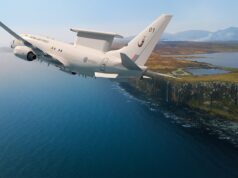
The new DS has been photographed next to the Proteus Drone.
Are we buying it? Does anyone even know?
Empty sums up this government quite well.
Meanwhile, with no money available to give to Defence beyond 10 billion ( the extra 3.5 was treasury accounting tricks ) we have as if by magic found 4.5 Billion for 5,000 more cycling and walking routes.
That’s good! I thought we were skint so as unable to fund our military?
On a more positive note I see the 4 Palestine activists that broke into the Elbit Systems factory near Bristol in 2024 on got lengthy sentences today at their retrial. Nice to see common sense and justice served.
👍
Simple criminality deserves jail time.
Good.
Hopefully this case lays down a marker for those awaiting trial (2027) for the brake in a Brize and did untold damage. Hope they’re all craping themselves now.
Break in.
Lengthy Sentences at yet more Tax payers Expense though.
Should have “Stuck em on a boat and shoved them off to Palestine.
OK I now see this “SM” again and think It Is something not to do with “Swindon” lol.
SM ?
If this Is the little Proteus Drone In the Pic, then this factory could house billions of the tiny critters !
It’s certainly not mate!!!!!
Proteus is real helicopter sized, pretty much!
Oh, I thought full sized Helicopters were too easy to shoot down now ?
Maybe It’s the Unmanned part that makes them a harder target 😂😂😂😂
Anyone spotted a USMC Apache lately… last seen over Kharg Island ? You can’t miss It, It’s simply bristling with weapons and really big and loud 😁
Daniele, can you say more about the £3.5m accounting tricks?
Hi Graham.
I can’t, only repeating what has been stated by several news pieces. One stated that the 3 service chiefs considered it HM accounting trick. We can guess, given HMG penchant for double counting and giving with one hand while quietly taking away from the other. Like the billions of in year savings demanded this year and I think last?
I read the same, not sure how the treasury tricks anyone out of £3.5 billion.
I’ll take it with a pinch of telegraph laced salt, the service chiefs are as big a group of liars in this as the politicans.
Jim….Accountants are the biggest tricksters of all !
I could tell you my own personal tale, It would make you cringe !
Jim,
How treasury tricks peeps out of £3.5 billion.
The issue you are highlighting is essentially the difference between cash that actually exists in a bank account and cash that exists only as an assumption on a spreadsheet.
When the government announces a total defence package, they are usually combining two types of money. The first type is genuine, new cash provided directly by the Treasury. The second type is money that the government claims will be found by making the Ministry of Defence run more cheaply.
The accounting trick is that the government counts these projected savings as if they are already money in the bank. They assume that if they force the Ministry of Defence to cut waste, shrink administration, or renegotiate contracts, they will eventually have 3.5 billion pounds left over. They then spend that money on paper before they have actually saved it.
This causes a problem because if the Ministry of Defence fails to find those efficiencies, or if the costs of running the military go up, that money does not exist. It creates a hole in the budget that the military must then fill by cutting other projects, such as delaying the purchase of new vehicles or reducing training exercises.
The 4.5 billion pounds for walking and cycling is different because it is usually allocated as direct capital expenditure from the Department for Transport. This is actual money being set aside from the national budget for specific projects that have a clear, immediate start date.
The frustration you are noting is that the government is choosing to fund domestic infrastructure with real, guaranteed money, while simultaneously funding a portion of the national security budget with money that the military has to invent for itself through internal cuts. It is a way for the government to show a large number on a press release without actually having to increase the tax take or shift money from other departments. They are balancing the books by gambling on the future performance of the Ministry of Defence’s internal management, rather than by making a firm commitment of new, hard cash.
Thank you. Well explained.
MoD has had to find these efficiencies for years.
Selling off bases and assuming that such a sell off would generate x amount is a common MoD trick.
Until they find that said base has to remain as the money to build a new home for the unit at the new location isn’t there, and said base remains on MoD estate.
Forgive me a small rant.
As an activist around Active Travel I can tell you that “clear projects with immediate starts” does not happen.
Leaving aside the peeps and taxi drivers who think that one mobility lane is the end of civilisation, the state systems are horribly badly organised, and not joined up at all.
It may be an actual £4.5 billion, but the system will make it impossible to spend much of it.
On the last one I followed, the amount of money to invest from the Transport Budget in multiyear period was not approved until we were well into the the period when it was required to be spent, then projects had to be bid for and put through planning, so there was only a small fraction of the period in which to do the project, which required contractor bids and the rest, then projects that would not be finished by the end had to go on hold for next time. And the money was not spent.
AKA it was a total mess. This is a short-termism, no planning for the longer term, and Treasury bickering problems.
it is now improved, with Active Travel England doing a very good job, but where I live local transport is now run by Reform UK who want to live in a Carry On film, and do not know how to run anything more complicated than a bath anyway. And are actively opposed to doing projects to make life easier and safer for people who are not in motor vehicles.
Consider the walking, wheeling and cycling bridge across the Trent near the football grounds that was just completed. It was first planned in 2021 for a budget of £9 million for a spring 2023 opening, and has just been finished for £18m in 2026.
The motoring lobby are still whining their heads off that any tiny amount of investment whatsoever should go to anyone else – such as the half of disabled adults or one third of pensioners who cannot drive. For context, on the Nottingham Ringroad £100m is being spent to bodge just ONE roundabout.
Matt W,
Better to vent than rant, your brain gets a hit of dopamine and oxytocin, you feel validated, heard and less alone in your frustration … as long as you don’t get caught in a cortisol loop.
What we have is an “Allocation Flaw” (my complaint), where the government inflates its budget announcements by counting unproven “internal efficiencies” as real cash, creating a deceptive fiscal outlook.
And a “Delivery Flaw” (your complaint), where the allocation consists of genuine, ring-fenced capital cash, institutional friction, consisting of rigid fiscal deadlines, competitive local bidding, planning bureaucracy, and shifting local political alignment, which creates massive underspend.
The end result is the same … the infrastructure never gets built.
That all works out well then, if the monies not getting spent then you don’t need to find the money to not spend it 👌😁
” The National Centre for Informed Decisions and Tripled Lethality. ”
I bet the meeting rooms are highly spec’d and full of biscuits.
And the latest Coffee machines.
True story. I support wildlife welfare. Found out that charity donations to one huge world wide animal welfare org had gone to tart up the new offices nesr me, complete with state of the art coffee machines.
My wife has been inside it and knows people who worked there.
When I donate, I assume my money goes to the animals, not the CEs lifestyle?
Yeah, this just screams MIC money pit, a good few peerages, consultancy and lobbying opportunities for failing politicians.
My other observation.
We have lots of these SME Drone companies.
What have we actually bought? British examples? Our UAV and other Drone types seem to be American or other foreign supplied?
That Jackal of a few years ago. Where is it? Why was it not bought?
Kraken for the RN is Brit I think.
What else? Modini?
My cynicim stops the moment HMG take Defence seriously
Till then….Just another show piece.
Was interesting what Al Carns said about the Dip.
Yes, take the Peregrine example you mentioned earlier. I’m not sure if it’s UK sovereign build, but it should , by now, be on every naval asset that has a heli – deck. I get the argument about CMS connection, but surely that cannot be beyond the wit and wisdom of defence technicians. Instead it’s endless forehead scratching and cheek sucking and more pointless meetings.
Daniele … Are we buying it? Does anyone even know?
The Proteus programme is not a purchase of a new aircraft or an established piece of military equipment. It is a government-funded experiment. The Ministry of Defence is paying Leonardo to figure out if it is actually possible to build a software brain capable of flying a large helicopter in a naval environment without a human pilot constantly making decisions.
The primary purpose is to stop the Royal Navy from burning out its limited supply of crewed Merlin and Wildcat helicopters on tedious, repetitive tasks. If the Navy can make an autonomous machine do the monotonous work of watching a patch of ocean for submarines or hauling heavy parts from one ship to another, they save their expensive, human-crewed aircraft for missions that actually require a pilot.
Regarding the cargo aspect, the drone is built to be a utility vehicle. The airframe has a large internal space that can be configured to hold significant weight, such as equipment pallets or spare parts. The idea is to create a drone that can fly autonomously between ships to move supplies in all weather conditions, which would remove the need to risk a crewed helicopter and its aircrew for a simple delivery mission.
The project is currently just a test of concepts. It is an attempt to see if they can create a flexible, multi-role drone that can switch between carrying sensors for submarine detection and carrying cargo for logistics. They are not buying a fleet of these drones yet because they are still in the process of proving that the technology is reliable enough to be trusted on the open ocean.
The focus on building a software stack is the most important part of the Proteus project, and it is the main reason it is not just another drone. In the world of aerospace, a stack refers to the entire integrated system of flight controls, sensor processing, and decision-making logic that tells the machine what to do.
The Ministry of Defence is not just trying to build a helicopter; they are trying to build the artificial intelligence that can interpret a complex, changing maritime environment. This involves teaching the drone how to navigate safely around ships, how to handle communications in an area where an enemy might be trying to jam those signals, and how to make tactical decisions based on the data it collects.
If they build a successful, modular stack, the physical helicopter becomes almost secondary. The hope is that this same software can be lifted out of the Proteus demonstrator and installed into any number of other platforms, whether those are future drones, uncrewed surface vessels, or even existing aircraft that need an autonomous upgrade. By focusing on the stack, they are trying to create an intellectual asset that provides long-term value, rather than just buying a single piece of hardware that will eventually need to be replaced.
The engineering challenge is that this software must be able to operate with total independence from a human pilot for long periods. It has to be able to detect a submarine, categorise that information, and then relay it across a secure network back to a command ship without any human input. This is why the project is so heavily focused on the software brain rather than the physical body of the aircraft
Hi again Magenta
Very well explained, thank you.
I suspect another large dose of spin from the MoD then! As I think where I was mistaken in this was in its mention in the RN Future Maritime Concept as Proteus, to replace Merlin ( as you mentioned ) in the fix and find role. They even released a nice chart with the varied types.
So just a concept. Nice chart though!
On a serious note, do we yet know the results of the stack experiments? The Rotary Drone element certainly looks the part.
‘to let the British armed forces develop and field uncrewed capabilities in weeks rather than years,’
In reality, that simply isn’t going to happen in any useful fashion unless ‘British armed forces’ are deployed on active operations requiring uncrewed capability upgrades every few weeks.
There are only two, maybe now only one, operational area where they can get that experience and there will be quite a few keen to get stuck in…
But we are so weak, we dare not deploy (SF excluded) anywhere (for real) really…
Could we even manage something like Sierra Leone now?
Poses in front of the Leonardo Proteus, won’t fund it for new research or moving to a new program.
Yes. What’s wrong with it? Assume it ends up like Taranis.
Leonardo argued that with digital twins and simulation you could get a lot of the testing data without doing any actual prototype flying. The only reason it was built at all was that the contract required a demonstrator to be flown.
Seems dubious to me as there’s no way of testing maintenance and deck operation without people, but it may allow us to order a production evolution straight off the drawing board.
“Seems dubious to me as there’s no way of testing maintenance and deck operation without people”
You certainly can do it with game engine like Unreal. But i doubt Leonardo has that capability.
loads of money in remote control.