

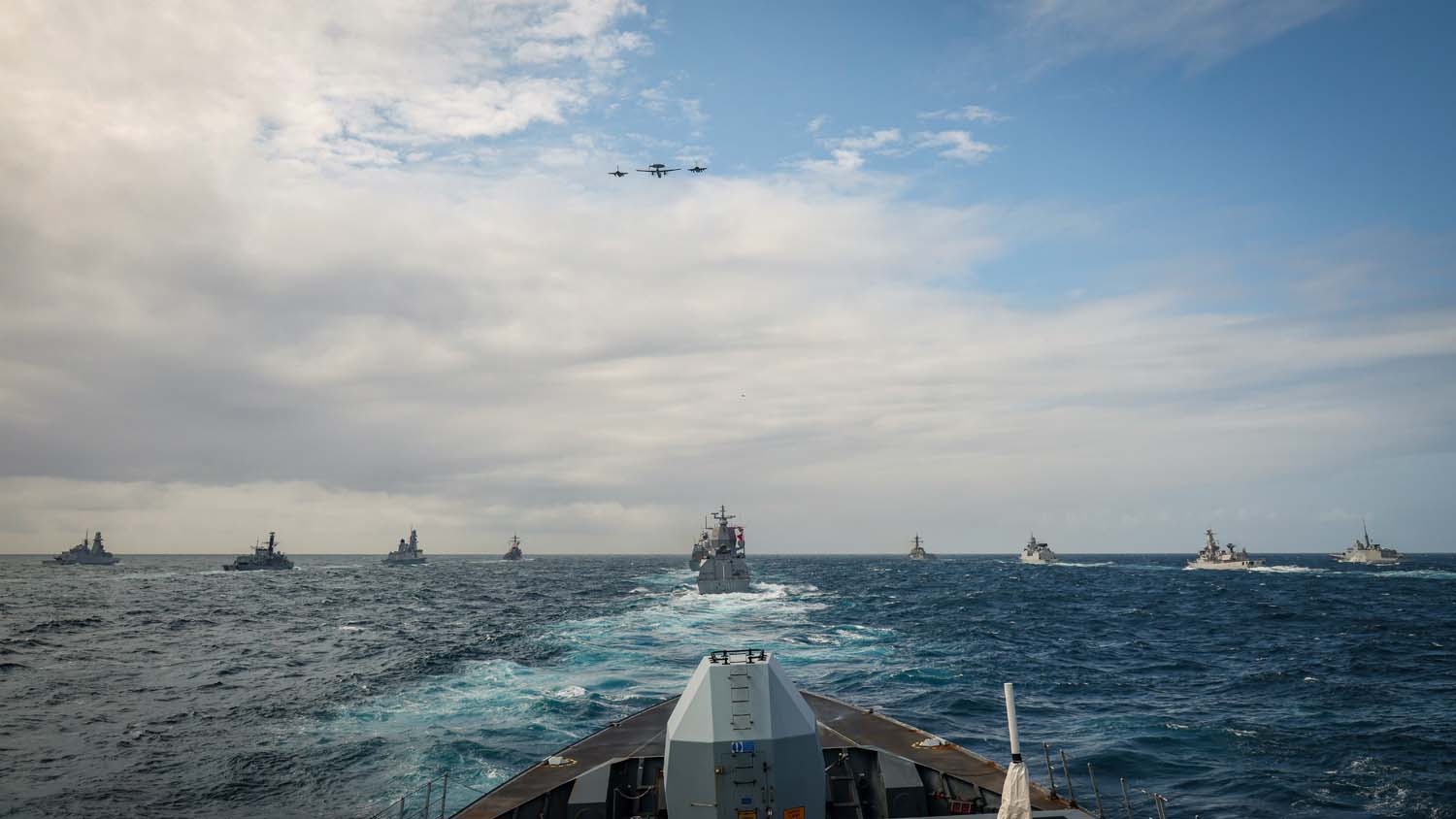
The conflict in the Middle East is already reshaping thinking about naval operations, with lessons around resilience, air defence, and intelligence exploitation coming sharply into focus, according to Thales’s Naval Defence Advisor Eric Chaperon.
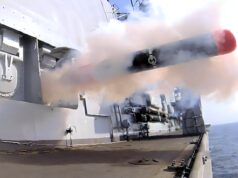
In an analysis published by the company, Chaperon drew four key lessons from the ongoing conflict. The first, he said, is that naval forces are vulnerable regardless of their distance from the front line. “At sea, you are not safe anywhere. The torpedoing of the Iranian corvette, far from the area of operations, is a striking example,” he said.
The second is the importance of resilience and the ability to sustain operations over time. Chaperon noted that it remains unclear whether American or Iranian forces will reach their limits first, framing the challenge as a balance between striking capacity and the risk of ammunition depletion on one side, and the capacity to absorb punishment and retaliate on the other.
Third, Chaperon highlighted intelligence as the key to action at every level. “What is new, however, is the ability to rapidly exploit this intelligence to accelerate the decision and engagement cycle. The Americans have become masters in this area, with, as a result, an efficient C2 based on a strong AI component,” he said.
His fourth lesson was that robust and adaptable air defence has become vital in the face of growing numbers of missiles and drones. He pointed to Thales’s recently launched SkyDefender system, which combines sensors, effectors, and command and control solutions, and said deployment of such capabilities must be accelerated.
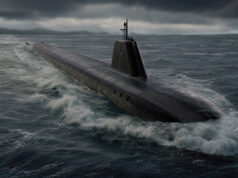
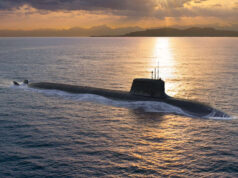
On the underwater domain, Chaperon acknowledged that much of Iran’s submarine capability has likely been destroyed but warned that the threat from underwater drones remains. “This stealthy threat is extremely difficult to detect and counter,” he said, adding that he could not rule out the possibility that Tehran could receive assistance from other powers possessing such capability.
He also raised the prospect of Iran mining the Strait of Hormuz, describing it as a plausible scenario. Should it occur, Chaperon said clearing the strait to reopen navigation would become an urgent operational requirement, and noted that mine countermeasures capabilities provided by Thales to the French and British navies could be called upon.
Chaperon set out four priorities for Thales in response to the conflict: robust in-service support for client navies, helping navies strengthen integrated air and missile defence, improving tactical awareness and decision-making speed, and providing tools for mastering the electromagnetic spectrum, an area in which he said the Americans are leading the way.


I think the ‘fourth’ lesson above should trump (no pun intended) the others. Air defence affects them all including and especially at sea, operationally overseas and for the homeland. Peace Dividend at what cost?
Until WW1, and even beyond, warships had limited means of finding their enemies. Now, surface ships locations can be pinpointed by satellites, surveillance aircraft, manned or unmanned. They cannot hide so have to rely on sophisticated self defence weapons to resist attacks. This makes them very expensive- £1b+ for a an air defence escort and not much less for an ASW frigate.- and with limited combat endurance.
The range of modern anti ship missiles forces ships further away from defended coastlines, limiting their ability to conduct amphibious operations.
Submarines remain hard to detect. Indeed CASD depends on that. So future navies may have to be largely sub surface in order to survive. Surface warships might be reduced to low cost patrol operations rather than forming part of the battle fleet.
China and America are on lines one and two.
“The torpedoing of the Iranian corvette, far from the area of operations, is a striking example,”
If your adversary has SSN and or support for conventional subs.
The idea of ‘hiding’ in an ocean has become a bit of a dead duck in the last 10 years but is still trotted out all the time as a reason for not having defences. At some point RN has to drop all that and arm eavery ship to the teeth so they are survivable against the proliferating multiplicity of threats.
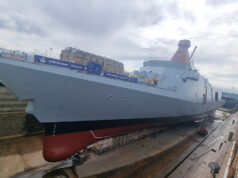
Does make you think how the current “fitting out” of the T31 makes it incredibly vulnerable to sub-surface attack!
And what about the T45s, carriers and RFAs? Haven’t TKMS just developed a anti-torpedo torpedo that could be worth looking at? Is it time to bring back a SEA TWS to launch ship based dual use torpedos?
That depends if it has CAPTAS or something else added to it.
You don’t get much from a passive hull sonar once you start moving at speed and even using it active high power is very limited.
I think T31 is fitted with SSTD so if this has been deployed the ship should have a reasonable chance of evading or spoofing a torpedo. I don’t think the IRIS Dena was fitted with an equivalent SSTD. Neither was she expecting to be attacked. One of the 2 Mk48 torpedoes fired by the Charlotte missed. It will be interesting to see whether the Proteus drone can deploy a sonabuoy dispenser or a dipping sonar and whether T31 can embark both a Wildcat and a Proteus.
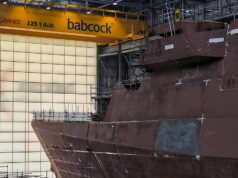
Interesting to know how T31 ‘Fitting Out’ is going.
Very slowly. They’ve never fitted out a complex warship before.
Sinking an unarmed warship on its way home from a commemorative event many thousands of miles away from the conflict amounts to murder of its crew – it’s a war crime.
“unarmed warship”
what?
It was reported here that ships were required to be de-ammo’ed before participating in the review.
It was returning from a live fire training exercise, it was definitely armed. Being far away also has no bearing on whether it was a war crime. This is the Belgrano argument all over again.
Are you sure about that?
It’s the question of what is enough and what is the threat… also the brutal truth what are you willing to loose.. in the west we have come to the conclusion losses are unacceptable hence the gold plating of capabilities.. the unpalatable true is in a peer war your losses are going to be catastrophic one way or another that’s just built into a peer existential war.. it was a accepted truth in the west until some time after the fall of the wall, the RN always knew the North Atlantic would be a butchers ground that’s why in the 1970s to 1990s it had 35 to 55 frigates.
I think as the risk of a peer war rescinded what was left was the though that the only conflict would be a war of choice against a none peer enemy and for that you want a tip of pyramid gold plated warship because in a war of choice casualties and losses become unacceptable.. as we head into a a grey war where Russia is using all sorts of tactics everywhere and the world is becoming more and more of a problem to things become apparent
1) presence vessels become more important but an unarmed presence vessel without the correct sensors is a liability
2) yes you must have your gold plated top end.. but that should be just enough ships of that type for what you need to do.. plant a Carrier in the high north or protect your nuclear deterrent.
That’s the RNs problem.. it’s recapitalising its high end capabilities.. updated T45, T26 the carriers and astute.. means the RN will be able to plant a CBG anyway and go we control this bit of sea… but what about the others Seas and Oceans.. the middle and lower tiers is simply not there and you will always loss any peer war with that level of unbalanced, because what you carrier battle group is off winning a battle and dominating a sea.. the enemy has destroyed your maritime infrastructure and starved your economy and in the long run its game over..
The US has done essentially the same but on a different scale.. in the mid 1980 to 1960s the US had 119 ok general purpose frigates to go with its 90 odd destroyers and cruisers… now it has no second line vessels just 80 gold plated ones.
I do wonder if western navies had a bit of a falklands shock.. ( losing warships is unacceptable ) that then shifted into a post Cold War only having wars of choice mentality… leading to tiny gold plated navies.
I think a mentality change needs to happen.. come world war three the RN is going to loss ships and it’s going to loss a lot of them, gold plated or not.. the winning side will be the side that still has some ships afloat and doing a job..
a) learn how to spell – it’s “lose”
b) You failed to explain how these middle and lower tier warships will be effective against peer level threats.They didn’t do very well against Argentina in the Falklands and Argentina then and now is far from a peer.
c) The RN can’t afford to be everywhere. They made a concrete choice that was echoed in the Strategic reviews that they would become a CBG based navy instead of escort based. Can’t afford to be both. Other NATO navies with their dozens of escorts can fill in.
So your on spelling now are you, wobble your head..
Let’s look at the Falklands, the only reason the RN could prosecute it was that it had the number of escorts it did. If it had been a fully high end gold plated limited numbers navy it would have been impossible to have both sent the number of escorts needed with the main fleet, escorted the follow-up logistics, as well as keep it’s ongoing security commitments… then adsorb the attritional losses of a near peer war.. it won the Falklands because it had numbers… even if many of those ships were poor.. it is the nature of naval conflicts to be attritional and the larger navy in numbers almost in every war wins.
Ahh but, Our entire fleet Is just so difficult to find at sea.
It was sooooo nice when you weren’t here 🙁